Use an AI customer-service chatbot for high-volume, low-risk questions with reliable source information and a clear human handoff. Do not use it as the only path for complaints, vulnerable customers, sensitive account decisions, or situations where current records are unavailable.
When an AI chatbot is a good fit
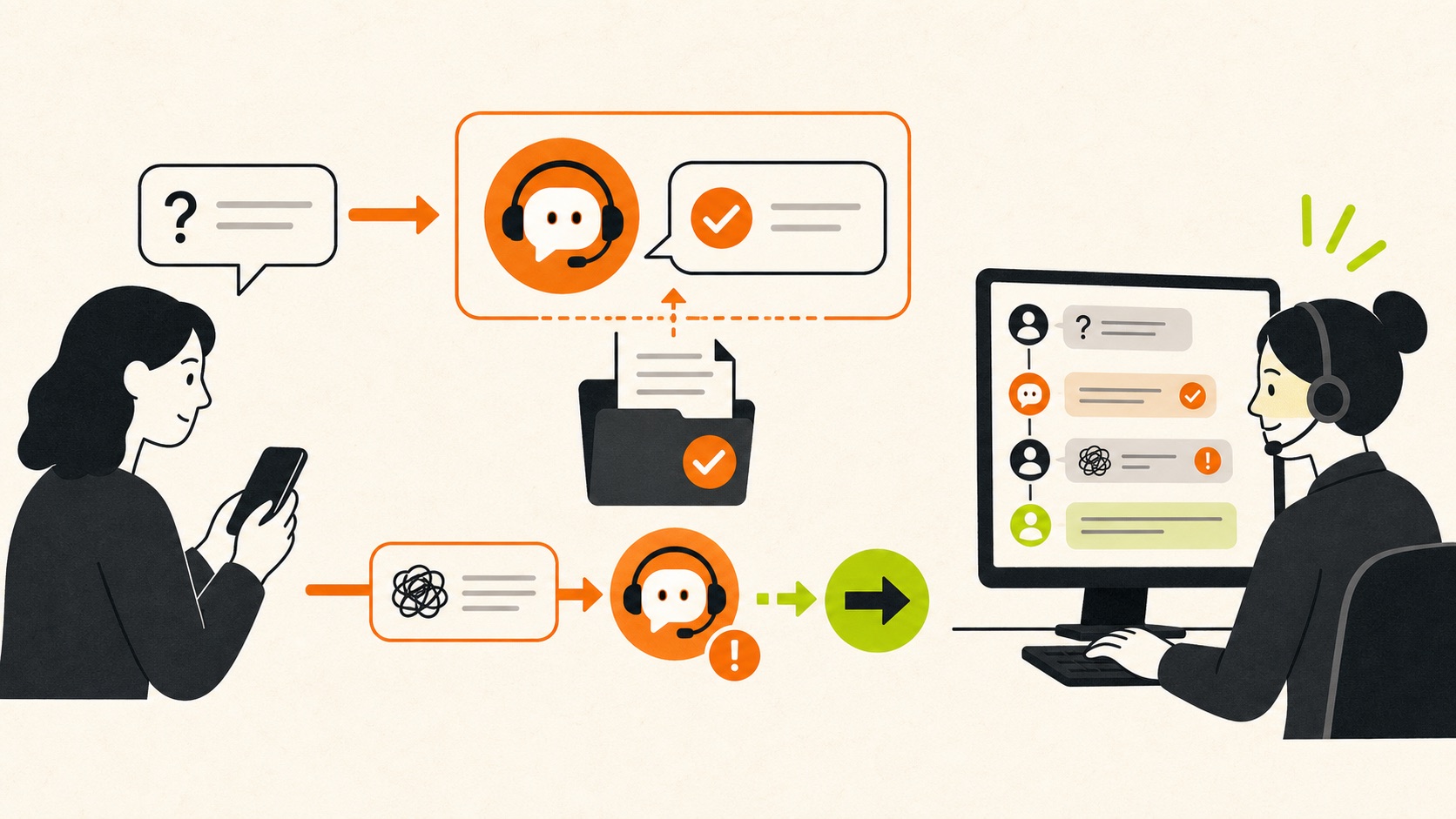
Good chatbot work is frequent, understandable, and recoverable. Examples include product questions, service-area checks, order status, appointment intake, troubleshooting from approved steps, and collecting details before a human joins.
The chatbot should have access to current information. A polished answer generated from an old policy is still wrong. Connect it to an approved knowledge source, expose the source version internally, and make content ownership part of the operating process.
If the customer needs an account change, the system also needs secure identity and authorisation. Conversation quality cannot replace access control.
When a chatbot is the wrong first solution
- The business does not have reliable answers to train or ground it.
- Most enquiries are unique, emotional, disputed, or high consequence.
- The customer must repeat information after handoff.
- The bot cannot see live account, booking, order, or inventory data.
- There is no staffed escalation path during the promised service window.
- Success is defined only as fewer human conversations.
In these cases, use AI behind the scenes first. It can classify requests, summarise context, suggest replies, and help staff find information without becoming the customer's only route.
Design the human handoff before the bot
A customer should be able to request a person directly. The system should also escalate automatically when confidence is low, the customer repeats themselves, sentiment deteriorates, policy requires review, or a tool fails.
Pass the conversation, verified identity state, actions already taken, source material, and a concise summary to the human queue. A handoff that forces the customer to start again is a workflow failure.
Google Cloud's current virtual-agent guidance recommends assigning a human agent to the same queue and supports automatic escalation when the system reaches its knowledge limit or encounters a technical problem.
Test the experience with real customer language
- Collect anonymised examples of routine, vague, misspelled, angry, and multi-part requests.
- Define approved answers, prohibited claims, and mandatory escalation conditions.
- Test retrieval against current and conflicting documents.
- Simulate outages, missing account data, and failed tool actions.
- Have service staff review both answers and handoff summaries.
- Launch to a limited segment and monitor daily before expanding.
Measure resolution, not just deflection
Track correct resolution, repeat contact, escalation rate, handoff quality, time to resolution, customer satisfaction, unsupported answers, and the share of conversations where a requested human was reached.
Containment can reduce cost, but a high containment rate may also mean customers are trapped. Read conversation samples and compare the chatbot's outcomes with the human service baseline.
The best service chatbot makes simple things easier and complicated things easier to reach, explain, and resolve with a person.
Sources and further reading
Research checked 23 July 2026. External guidance can change; confirm current legal, privacy, security, and vendor requirements for your situation. Read our editorial policy.
- About virtual agents — Google Cloud
- Contact Center AI Platform — Google Cloud
- Privacy and commercially available AI products — OAIC
Want to apply this to your own business?
BrainSwerve maps the workflow, checks where AI is useful, and designs the controls before anything is built.